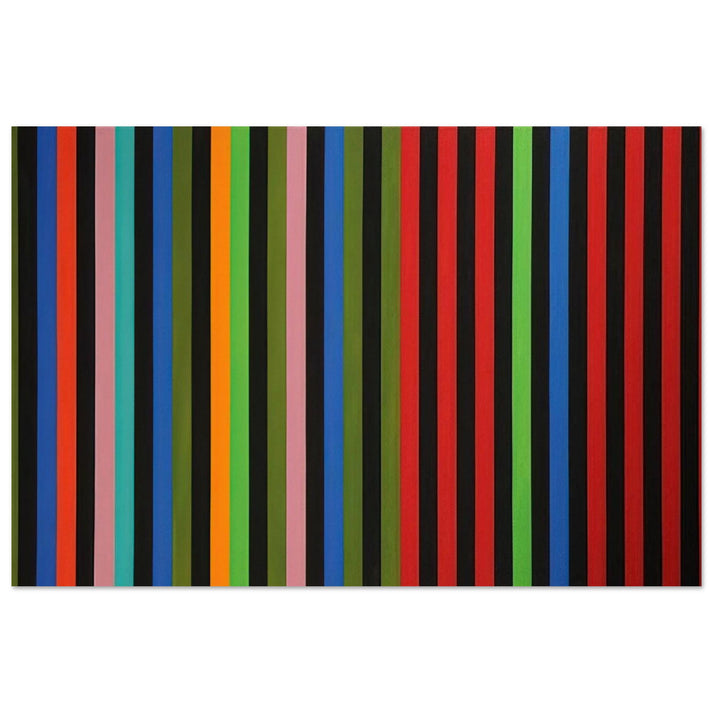


Firebox - 1964 - Gene Davis Art Prints - 100x150 cm / 40x60″ inches | Gene Davis Poster | Gene Davis Prints
Firebox - 1964 - Gene Davis Art Prints - 100x150 cm / 40x60″ inches | Gene Davis Poster | Gene Davis Prints
No se pudo cargar la disponibilidad de retiro
Gene Davis' Firebox (1964): A Striped Symphony in Museum-Quality Archival Print
Elevate your space with Gene Davis' Firebox (1964), a vibrant masterpiece from the Washington Color School movement. This fine art print captures Davis' signature rhythmic stripes, a bold exploration of color and optical dynamism that redefined abstract art in the 1960s. Now, experience the energy of this iconic work as a museum-quality reproduction, meticulously crafted to preserve the artist's original intent.
RedKalion's Master's Edition archival paper—off-white, uncoated, and luxuriously textured—ensures your Gene Davis poster transcends ordinary decor. With a 250 gsm (110 lb) weight and acid-free composition, this print resists yellowing and fading, offering a tactile richness that mirrors the depth of Davis' palette. The matte finish eliminates glare, allowing the colors to sing with the same intensity as the original.
Measuring 100x150 cm (40x60″ inches), this large-format art print commands attention, transforming any wall into a gallery-worthy statement. Whether you're a seasoned collector or a design enthusiast, Firebox brings the spirit of mid-century abstraction into your home with unparalleled sophistication.
Davis, a pioneer of the Washington Color School, rejected traditional brushwork in favor of vertical stripes, creating a visual rhythm that pulses with movement. His use of hard-edged abstraction and high-key colors in Firebox exemplifies the era's break from representational art, inviting viewers to lose themselves in the interplay of hue and form. This archival-grade reproduction honors that legacy, delivering a piece that is as enduring as it is captivating.
Printed on FSC-certified sustainable paper, your Gene Davis print is not only a celebration of art but also of responsible craftsmanship. RedKalion's commitment to museum-quality standards ensures that every detail—from the precision of the colors to the archival longevity of the materials—meets the exacting demands of collectors and institutions alike.
Bring home a slice of art history with Firebox, a timeless fine art print that bridges the gap between mid-century innovation and contemporary elegance. This is not just a poster; it's an investment in beauty, quality, and the enduring power of abstract expression.


Discover Unlimited Art Possibilities
At RedKalion, you can find virtually any artwork from any artist, available in a wide range of sizes to perfectly match your space.
If you didn’t find what you’re looking for, contact us at support@redkalion.com . We will source any artwork and produce it in any size and format you need, including art prints, posters, canvas, framed pieces, framed canvas, and more.
For dedicated art enthusiasts, we also offer handcrafted replicas of any artwork, carefully painted by highly skilled artists using traditional techniques.
For custom requests, contact us at support@redkalion.com .
What makes this Gene Davis Firebox print museum-quality?
Our Master's Edition archival paper is acid-free, 250 gsm, and FSC-certified, ensuring museum-quality reproduction with vibrant colors and long-term durability. The matte finish preserves the original artwork's integrity.
Is the paper uncoated, and why does that matter?
Yes, the uncoated, off-white paper enhances texture and depth, mimicking the tactile quality of original artworks. It also reduces glare, making it ideal for fine art prints like Firebox.
How large is the 100x150 cm (40x60″) Gene Davis print?
This large-format art print measures 100x150 cm (40x60″), making it a bold statement piece that commands attention in any space, from galleries to modern interiors.
Will the colors fade over time?
No. Our acid-free, archival paper (pH above 7) and high-quality inks resist yellowing and fading, ensuring your Gene Davis poster remains vibrant for decades.
How is the print shipped, and is it protected?
Your fine art print is rolled in a sturdy tube and shipped with protective packaging to prevent damage. We prioritize safe, secure delivery for all museum-quality reproductions.
What is the significance of Firebox in Gene Davis' career?
Firebox (1964) exemplifies Davis' hard-edged abstraction and his role in the Washington Color School. Its rhythmic stripes redefined mid-century abstract art, making it a pivotal work in his oeuvre.
Why did Gene Davis use vertical stripes in Firebox?
Davis used vertical stripes to create optical movement and rhythm, rejecting traditional composition. This technique in Firebox reflects his belief in color as an independent, dynamic force in art.