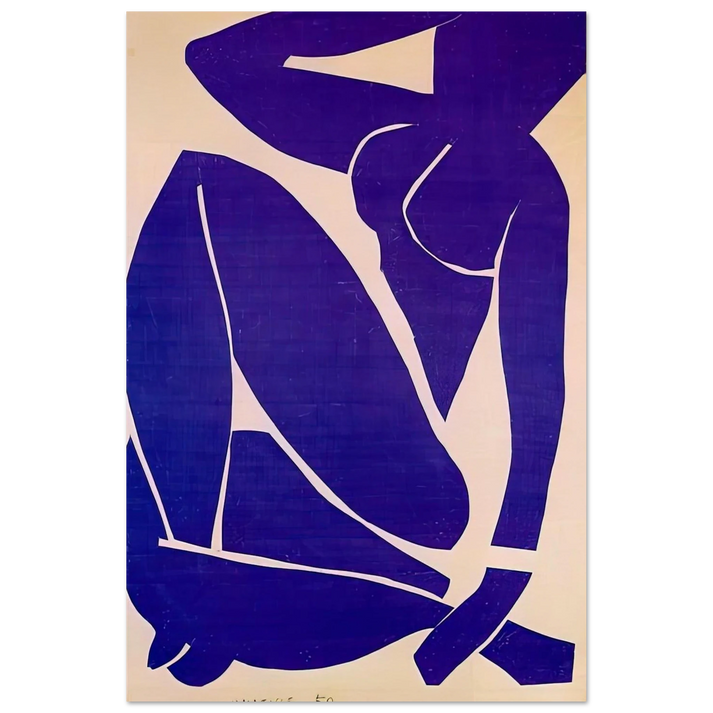


BLUE NUDE III 1952 - Henri Matisse Art Prints - 100x150 cm / 40x60″ inches | Henri Matisse Poster | Henri Matisse Prints
BLUE NUDE III 1952 - Henri Matisse Art Prints - 100x150 cm / 40x60″ inches | Henri Matisse Poster | Henri Matisse Prints
No se pudo cargar la disponibilidad de retiro
Henri Matisse's Blue Nude III (1952) – A Museum-Quality Archival Print
Own a fragment of modernist genius with this exquisite reproduction of Henri Matisse’s Blue Nude III (1952), a defining work of his celebrated cut-out period. This fine art print captures the bold simplicity and chromatic brilliance of Matisse’s late-career masterpiece, where paper and scissors became his brush and canvas. Rendered in vibrant ultramarine, the figure’s sinuous form embodies the artist’s lifelong pursuit of harmony, balance, and pure expression.
RedKalion’s Master’s Edition archival paper ensures this Henri Matisse poster transcends ordinary wall decor. Printed on 250 gsm (110 lb) acid-free, FSC-certified paper with a matte, uncoated finish, the print delivers a tactile, gallery-worthy experience. The off-white, natural tone of the paper enhances the artwork’s luminosity while preserving its integrity for generations. Every detail—from the delicate scissor marks to the interplay of positive and negative space—is reproduced with museum-grade precision.
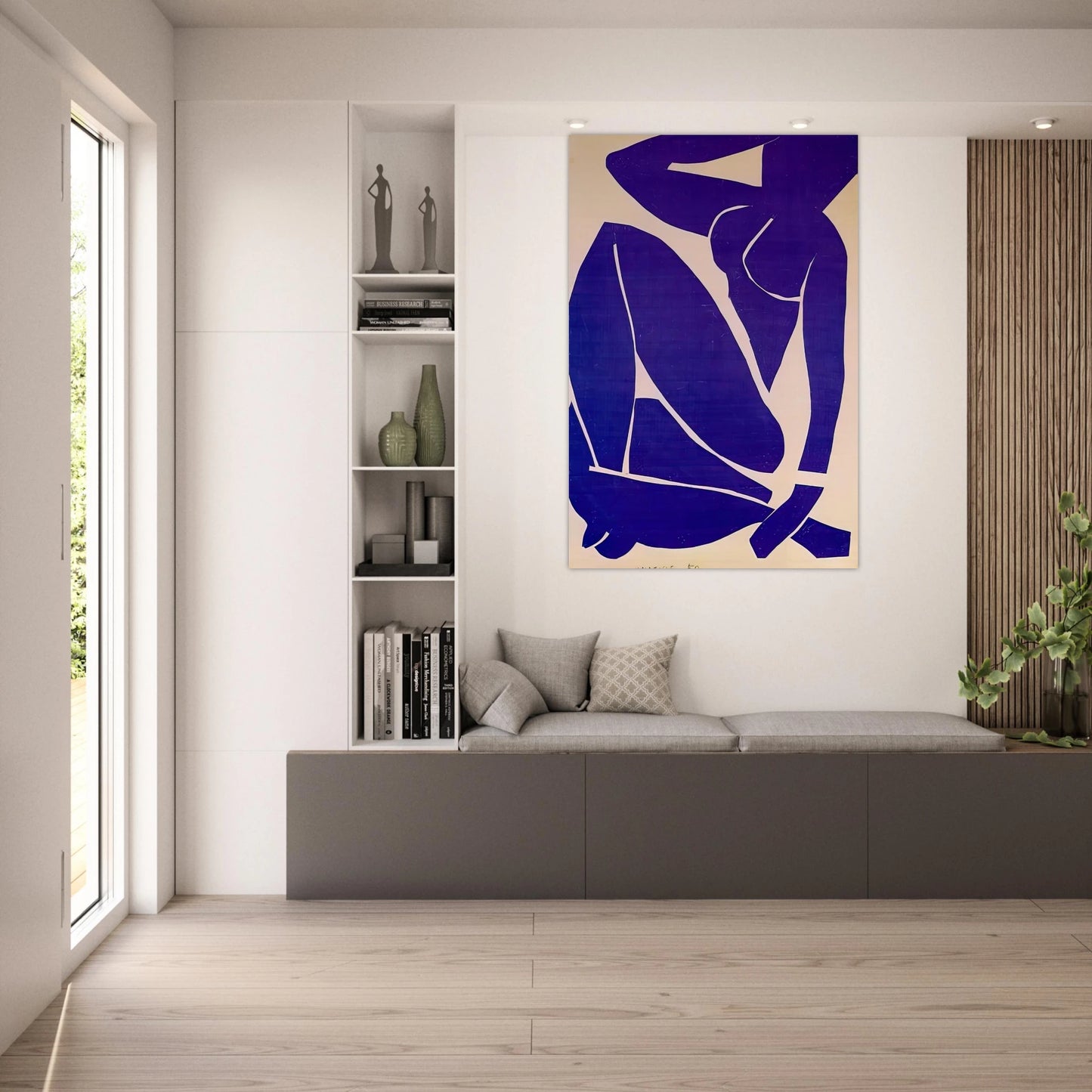
Measuring 100x150 cm (40x60″ inches), this large-format Matisse print commands attention, transforming any space into a sanctuary of modern art. Whether displayed in a minimalist loft, a curated gallery wall, or a corporate setting, Blue Nude III infuses the room with sophistication and intellectual depth. As Matisse himself declared, "An artist must never be a prisoner of himself, a prisoner of style, a prisoner of reputation, a prisoner of success." This print is your invitation to break free.
RedKalion’s commitment to archival-quality reproductions means your Henri Matisse print is crafted to endure. The pH-neutral, acid-free paper resists yellowing and deterioration, while the 0.29 mm (11.4 mils) thickness ensures durability without compromising the artwork’s delicate nuances. Sustainably sourced and meticulously printed, this is not just a poster—it’s a legacy.
Elevate your collection with a piece that bridges the gap between avant-garde innovation and timeless elegance. Blue Nude III is more than a print; it’s a conversation between Matisse’s revolutionary vision and your personal space.
- Artist: Henri Matisse (1869–1954), French modernist master
- Artwork: Blue Nude III (1952), part of the iconic Blue Nudes series
- Paper: Master’s Edition archival paper, 250 gsm, matte uncoated, off-white
- Size: 100x150 cm (40x60″ inches)
- Longevity: Acid-free, pH-neutral, FSC-certified for sustainability


Discover Unlimited Art Possibilities
At RedKalion, you can find virtually any artwork from any artist, available in a wide range of sizes to perfectly match your space.
If you didn’t find what you’re looking for, contact us at support@redkalion.com . We will source any artwork and produce it in any size and format you need, including art prints, posters, canvas, framed pieces, framed canvas, and more.
For dedicated art enthusiasts, we also offer handcrafted replicas of any artwork, carefully painted by highly skilled artists using traditional techniques.
For custom requests, contact us at support@redkalion.com .
What makes this Blue Nude III print museum-quality?
Our Henri Matisse print is produced on 250 gsm acid-free, FSC-certified paper with a matte, uncoated finish, ensuring archival longevity and a gallery-worthy presentation. The off-white tone enhances color fidelity, while the thickness (0.29 mm) provides durability.
How does the paper’s matte finish affect the artwork’s appearance?
The matte, uncoated finish of our Master’s Edition archival paper eliminates glare, allowing Matisse’s vibrant ultramarine and delicate scissor marks to shine. It also creates a tactile, premium feel akin to original artworks.
Is this Blue Nude III print suitable for framing?
Absolutely. The 100x150 cm (40x60″ inches) size is ideal for standard large-format frames. The 250 gsm thickness ensures it lies flat and resists buckling, making it perfect for professional framing or direct display.
How long will this Henri Matisse poster last?
The acid-free, pH-neutral paper prevents yellowing and deterioration, ensuring your fine art print remains vibrant for decades. Proper care (avoiding direct sunlight and humidity) extends its lifespan further.
What are the shipping options for this large-format print?
We ship Henri Matisse prints worldwide, rolled in a sturdy tube to prevent creasing. Expedited and tracked shipping options are available for your convenience. Delivery times vary by location.
Why did Matisse create the Blue Nudes series?
In his late career, Matisse turned to paper cut-outs due to declining health, using scissors to "draw with color." The Blue Nudes (1952) reflect his quest for purity and harmony, distilling the human form into bold, expressive shapes.
How does Blue Nude III differ from Matisse’s earlier works?
Unlike his Fauvist paintings, Blue Nude III abandons brushwork for cut-paper collage, emphasizing flat planes and rhythmic lines. This shift marked Matisse’s final artistic evolution, blending sculpture, drawing, and painting.