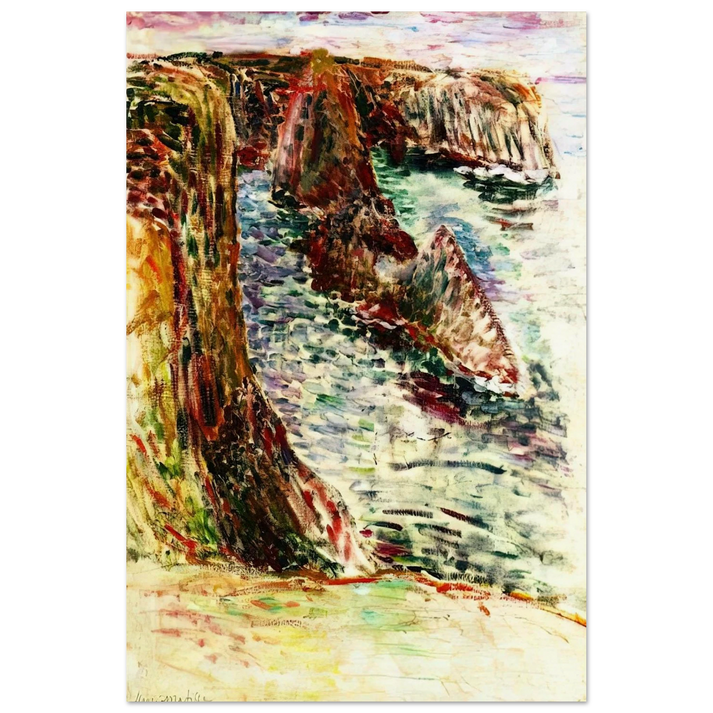


BELLE ILE EN MER 1897 - Henri Matisse Art Prints - 100x150 cm / 40x60″ inches | Henri Matisse Poster | Henri Matisse Prints
BELLE ILE EN MER 1897 - Henri Matisse Art Prints - 100x150 cm / 40x60″ inches | Henri Matisse Poster | Henri Matisse Prints
No se pudo cargar la disponibilidad de retiro
Henri Matisse's Belle Île en Mer, 1897: A Masterpiece Reborn in Archival Splendor
Step into the luminous world of Henri Matisse with this museum-quality reproduction of Belle Île en Mer, 1897, a pivotal work from the artist's formative years. Capturing the rugged beauty of Brittany's coastline, this piece exemplifies Matisse's early mastery of color and light—long before his revolutionary Fauvist period. Now, RedKalion brings this historic artwork to life on our Master's Edition archival paper, meticulously crafted to preserve the artist's intent for generations.
This fine art print is not merely a decoration; it is a luxurious, archival-grade reproduction designed for discerning collectors and art lovers. Our 250 gsm (110 lb), acid-free, FSC-certified paper—with its velvety matte finish and natural off-white hue—ensures that every brushstroke and nuance of Matisse's original composition is rendered with breathtaking fidelity. The uncoated surface enhances the tactile experience, inviting you to appreciate the artwork as Matisse himself might have envisioned it.
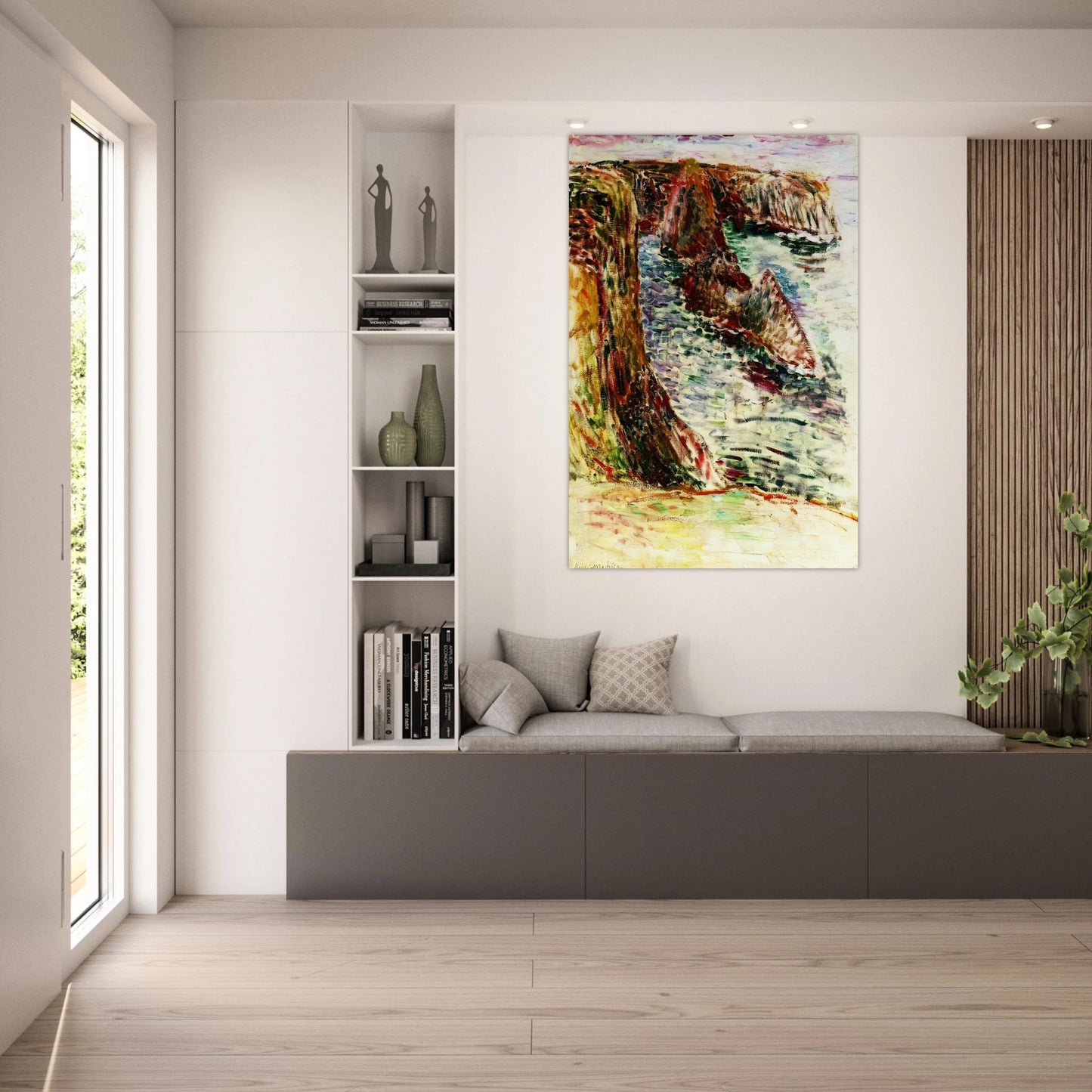
Measuring an impressive 100x150 cm (40x60 inches), this large-format print commands attention, transforming any space into a gallery-worthy environment. Whether displayed in a minimalist modern interior or a classic study, Belle Île en Mer, 1897 infuses your home with the serene, windswept energy of the Breton coast—a testament to Matisse's ability to distill nature's essence into pure artistic harmony.
RedKalion's commitment to sustainability and craftsmanship ensures that your print is as enduring as it is exquisite. Our paper, with a pH above 7, resists yellowing and degradation, while the 0.29 mm (11.4 mils) thickness provides a substantial, gallery-ready presence. This is not a fleeting poster; it is an investment in beauty, history, and timeless elegance.
Why This Artwork Matters: Painted during Matisse's 1896–1897 sojourn in Belle Île, this work marks a critical juncture in his career. Here, you can trace the seeds of his later innovations—his bold use of color, his dynamic compositions—all rooted in the natural world. Unlike the frenetic energy of his Fauvist works, Belle Île en Mer, 1897 offers a quieter, more introspective glimpse into the artist's evolution. It is a rare opportunity to own a piece of art history, reimagined with the precision and reverence it deserves.
Elevate your space with a masterpiece that transcends time. This is not just a print; it is a legacy.


Discover Unlimited Art Possibilities
At RedKalion, you can find virtually any artwork from any artist, available in a wide range of sizes to perfectly match your space.
If you didn’t find what you’re looking for, contact us at support@redkalion.com . We will source any artwork and produce it in any size and format you need, including art prints, posters, canvas, framed pieces, framed canvas, and more.
For dedicated art enthusiasts, we also offer handcrafted replicas of any artwork, carefully painted by highly skilled artists using traditional techniques.
For custom requests, contact us at support@redkalion.com .
What makes this Henri Matisse print a museum-quality reproduction?
Our Belle Île en Mer, 1897 print is crafted on 250 gsm acid-free, FSC-certified paper with a matte finish, ensuring archival longevity and true-to-life color fidelity. RedKalion's Master's Edition paper meets the highest standards for fine art reproductions.
Is the paper truly acid-free, and why does that matter?
Yes, our paper has a pH above 7, making it acid-free. This prevents yellowing and degradation over time, ensuring your Henri Matisse print remains vibrant and pristine for decades.
What are the exact dimensions of this Henri Matisse poster?
This print is available in a large format: 100x150 cm (40x60 inches), perfect for making a bold statement in any room.
How thick is the paper, and does it feel like a premium print?
The paper is 0.29 mm (11.4 mils) thick with a 250 gsm (110 lb) weight, giving it a substantial, gallery-quality feel. The uncoated matte finish enhances its luxurious texture.
Does RedKalion ship internationally, and how is the artwork protected?
Yes, we ship worldwide. Each Belle Île en Mer, 1897 print is carefully rolled in a sturdy tube and protected with archival-grade materials to ensure safe delivery.
What inspired Henri Matisse to paint Belle Île en Mer, 1897?
Matisse painted this work during his 1896–1897 stay in Belle Île, Brittany, where the rugged coastline and dramatic light captivated him. This piece reflects his early exploration of color and nature, foreshadowing his Fauvist breakthroughs.
How does this print compare to Matisse's later Fauvist works?
Unlike his bold, expressive Fauvist paintings, Belle Île en Mer, 1897 is more subdued and naturalistic. It offers a rare glimpse into Matisse's formative years, showcasing his evolving technique before his revolutionary use of color.